Sep 18, 2026
Why You Need a DFM Review Before Opening Tooling in China
Use a DFM review before tooling in China to identify draft, tolerance, assembly, material and cosmetic risks before steel is cut.
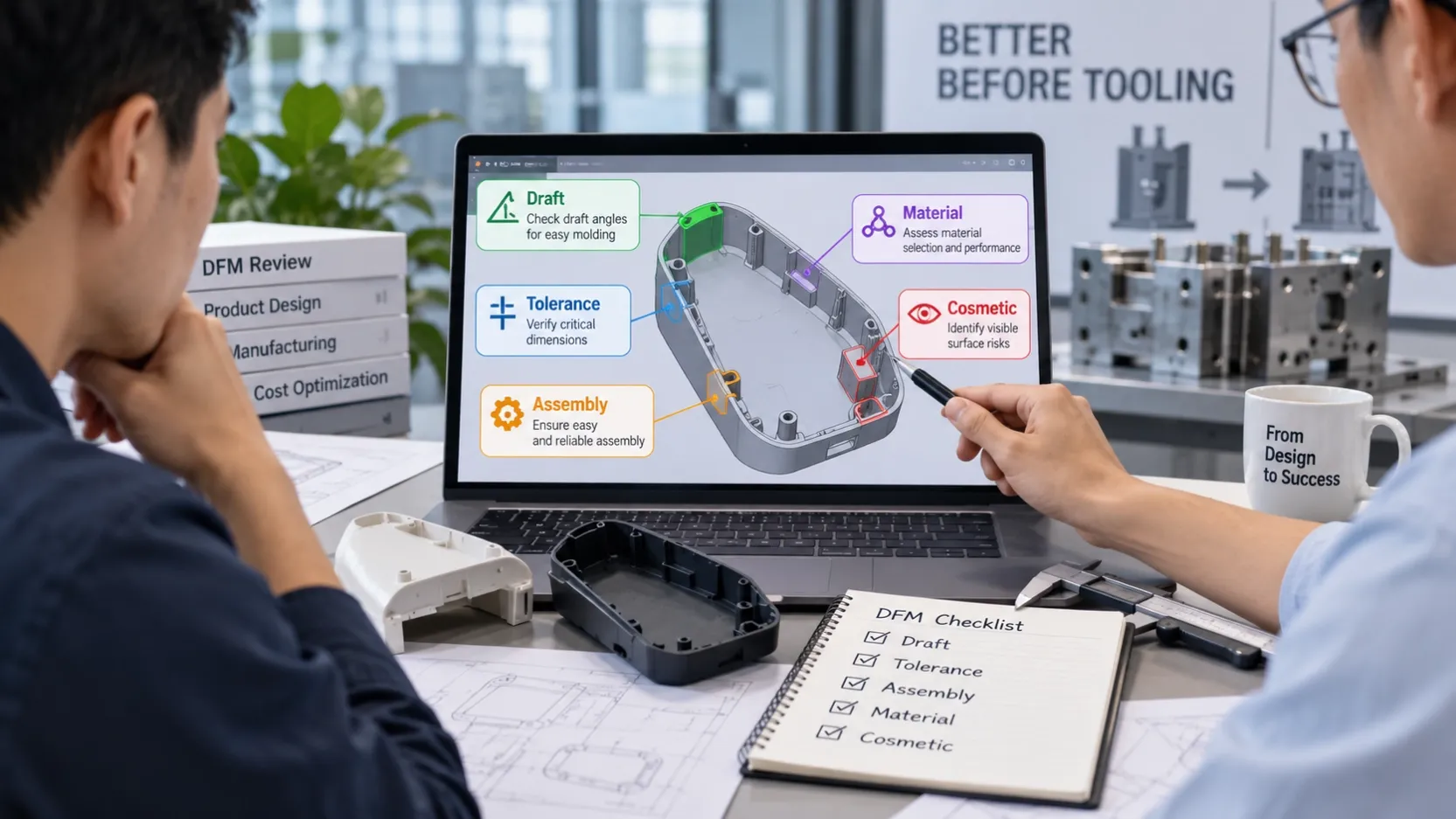
A DFM review should happen before tooling is released because many design details that look acceptable in CAD can create molding, finishing, assembly or yield problems.
Why this becomes a sourcing problem
Once mold steel is cut, changes take longer and cost more. Common issues include insufficient draft, difficult parting lines, unrealistic tolerances, visible gate marks, weak bosses, trapped fasteners and assemblies that require excessive manual fitting.
The commercial risk is rarely limited to the visible unit price. It can affect tooling, component commitments, inspection, compliance, inventory and the buyer's customer promise. The right response is to make responsibilities and evidence explicit before the next payment or production release.
What buyers should verify
- Review draft angles, wall thickness, ribs, bosses and undercuts.
- Confirm critical dimensions and realistic tolerance stack-ups.
- Agree gate, ejector, parting-line and cosmetic-surface locations.
- Check material shrinkage, finish and color expectations.
- Review assembly access, fixtures and serviceability.
These checks should be adapted to the product. Safety-critical electronics, children's products, connected devices and regulated markets normally require more technical evidence than a simple non-powered consumer item. Supplier statements should be separated from records the buyer can verify.
How Reality Sourcing helps
Reality Sourcing brings the product designer, mold maker and assembly factory into the same review. We document open points, request manufacturability feedback and confirm which changes affect appearance, function, tooling cost or cycle time. The final release includes approved drawings and an agreed change process.
We do not treat supplier sourcing as a one-time price search. The work connects specification, supplier selection, engineering, production follow-up, inspection and shipment. When specialist legal, customs or laboratory advice is required, the relevant qualified provider should confirm the final decision.
A practical project workflow
- Clarify the buyer's product, market, quantity, target cost and deadline.
- Identify the technical and commercial risks that could change the result.
- Collect supplier evidence using the same questions and specification.
- Compare capability, assumptions, price and responsibility—not price alone.
- Record approvals, revisions and open issues before production.
- Check the agreed controls during production and before shipment.
This workflow gives the buyer a traceable basis for decisions and makes problems easier to correct while options still exist.
What to send us
Send 3D files, 2D drawings, material requirements, cosmetic standards, expected volume and photos of any reference product.
Include any approved samples, supplier messages or previous inspection findings that explain the current situation. Send your project brief to Reality Sourcing and we will outline the next practical checks.
For supplier qualification fundamentals, read how to find reliable suppliers in China. You can also review our sourcing and product-development capabilities.