Product Sourcing
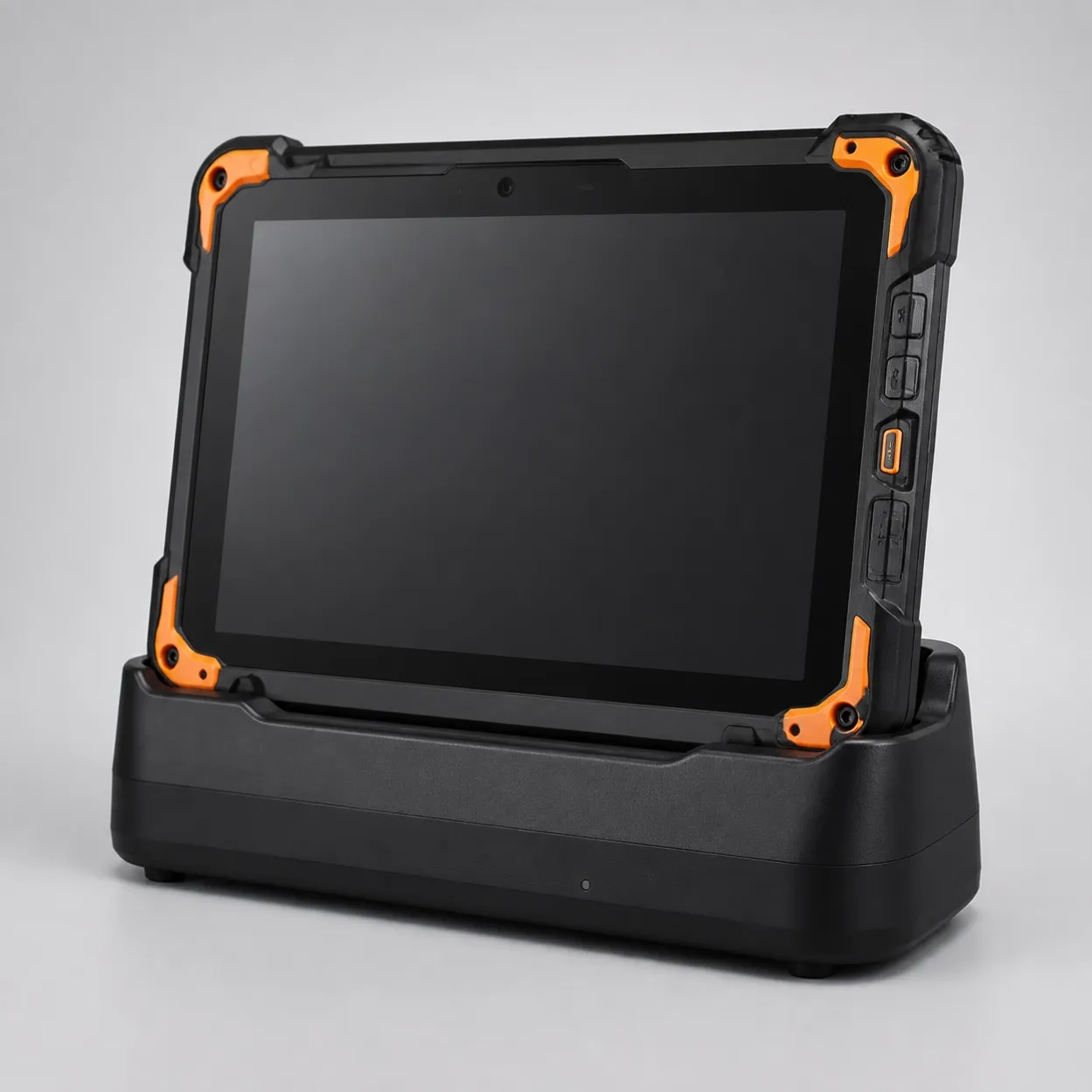
10-Inch Rugged Android Tablet for OEM Sourcing
Compare rugged Android tablet durability, display, scanner, battery, software, compliance and OEM options before sourcing from China.
A rugged tablet can serve warehouses, field service, inspection, construction, retail inventory and mobile point-of-service teams. Current 2026 editorial coverage still treats rugged tablets as a distinct professional category. IDC, however, expects the overall tablet market to decline in 2026, so the sourcing case should be based on a defined workflow and deployment rather than a broad consumer-growth claim.
Recommended sourcing specification
Parameter | Practical target |
|---|---|
Display | 10.1-inch, 800-nit option, glove and wet-touch behavior defined |
Protection | IP65/IP67 option with exact test report; stated drop height and surface |
Memory | 6GB/128GB minimum for current business deployments |
Radio | Wi-Fi 6, Bluetooth 5.x, GNSS and destination-specific 4G/5G bands |
Battery | 8,000mAh-class, test conditions declared; replaceable option |
Expansion | USB-C, pogo-pin dock, optional barcode scanner and NFC |
Software | Android version, security-update term and MDM compatibility declared |
What must be validated
Do not accept “IP67” or “MIL-STD tested” as sufficient descriptions. Ask for the laboratory, standard edition, sample configuration, drop height, number of drops, impact surface and operating state. Test seals again after production aging and accessory use.
Measure outdoor readability, touch response with gloves and water, GNSS lock, Wi-Fi roaming, cellular bands, speaker and microphone performance, charging temperature and real battery runtime. If a barcode module is included, validate decoding speed, damaged-label performance and the SDK in the buyer's real application. Cycle docks, pogo pins, covers and removable batteries on production-equivalent samples.
Price and configuration ladder
- Entry: semi-rugged Wi-Fi tablet, basic rubber enclosure and fixed battery.
- Mid-tier: IP65-class unit with 4G, brighter display, GNSS, NFC and charging dock.
- Premium: 5G, enterprise scanner, hot-swappable battery, richer accessories, longer Android support and fleet-management integration.
OEM and ODM fit
OEM options include boot logo, enclosure color, printed marks, memory bundles, charger, packaging, dock, hand strap and vehicle mount. ODM work can add scanner modules, NFC, custom I/O, battery structure, mainboard changes, firmware, kiosk mode and customer applications. Software ownership, update responsibility and scanner SDK support should be contractual deliverables.
Compliance and sourcing risks
The final destination and radio combination determine FCC, CE/RED, EMC, RoHS and carrier requirements. Lithium batteries require UN38.3 transport documentation. Product claims should identify the specific IP, vibration and drop methods used. Common risks include substituted displays or batteries, incomplete LTE bands, unstable docks, exaggerated durability claims, poor Android security support and accessories that disappear after launch.
RFQ checklist
- Workflow, user environment, destination and annual forecast
- Display size, brightness, glove/wet-touch requirement
- IP and drop standards with exact test method
- CPU, RAM, storage, Android version and update term
- Wi-Fi/cellular bands, GNSS, NFC and scanner requirements
- Battery runtime conditions, charging and replaceability
- Dock, mount, strap, stylus and accessory-cycle targets
- Certifications, pilot quantity, warranty and spare-parts term
Reality Sourcing can screen platform suppliers, coordinate durability and functional testing, and control approved components through production. See our product-development capabilities or send your rugged-tablet requirements.